

Vol. 14. Núm. 18.
Páginas 1045-1054 (Octubre 2024)

Actualización
Etiopatogenia y situación epidemiológica de la diabetes mellitus tipo 1

Etiopathogenesis and epidemiological situation of type 1 diabetes mellitus

A. Bayona CebadaabcdJ.B. Quiñones SilvaaH.F. Escobar-MorrealebcdL. Nattero Chávezabc
Doi : https://10.1016/j.med.2024.10.001
Opciones
Resumen

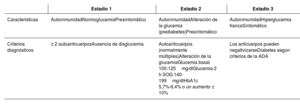
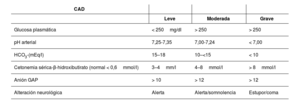
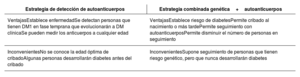
La diabetes mellitus tipo 1 (DM1) es responsable del 5%-10% de los casos de diabetes a nivel mundial. En la mayoría de los pacientes, la patogenia es una destrucción de origen autoinmune de las células β pancreáticas; existiendo un pequeño porcentaje de origen idiopático. Aunque su inicio es más frecuente en la edad pediátrica, también puede aparecer en la edad adulta, donde el curso suele ser más lento. Se han definido tres fases o estadios de la DM1; virtualmente todos los pacientes con dos o más anticuerpos desarrollarán DM1 clínica (estadio 3). En cuanto a la prevención de la DM1, existen múltiples terapias en estudio que van dirigidas a frenar el proceso inmunológico o a preservar la célula β. Solo el teplizumab ha sido aprobado por la FDA en el estadio 2 de la DM1. El cuadro clínico típico en el diagnóstico de DM1 es la cetoacidosis diabética (CAD), considerada una urgencia médica que requiere la administración de insulina para su resolución. La determinación de autoanticuerpos en familiares de pacientes con DM1ha aumentado los casos de DM1 preclínica o asintomática, y se está planteando la necesidad de un cribado universal de la DM1.

Palabras clave
Diabetes tipo 1
Autoinmunidad
Prevención de diabetes tipo 1
Manifestaciones clínicas
Screening de diabetes tipo 1
Abstract

Type 1 diabetes mellitus (DM1) accounts for 5%-10% of diabetes cases worldwide. In most patients, the pathogenesis is the autoimmune destruction of pancreatic beta cells; in a small percentage, the origin is idiopathic. Although its onset is more common in children, it can also appear in adults, in whom the course is usually slower. Three phases or stages of DM1 have been defined. Virtually all patients with two or more antibodies will develop clinical DM1 (stage 3). In regard to DM1 prevention, there are multiple therapies under study that are aimed at halting the immunologic process or preserving the beta cell. Only teplizumab has been approved by the FDA in stage 2 DM1. The typical clinical symptoms in the diagnosis of DM1 is diabetic ketoacidosis (DKA), which is considered a medical emergency that requires the administration of insulin for its resolution. The determination of autoantibodies in relatives of patients with DM1 has increased the detection of cases of preclinical or asymptomatic DM1 and the need for universal screening for DM1 is being proposed.

Keywords
Type 1 diabetes
Autoimmunity
Type 1 diabetes prevention
Clinical manifestations
Type 1 diabetes screening

Identifíquese

¿Aún no es suscriptor de la revista?

Comprar el acceso al artículo

Comprando el artículo el pdf del mismo podrá ser descargado

Teléfono para incidencias

De lunes a viernes de 9h a 18h (GMT+1) excepto los meses de julio y agosto que será de 9 a 15h

Llamadas desde España 932 415 960
Llamadas desde fuera de España +34 932 415 960
Bibliografía
[1]
American
202410140631539808
202410140631539809
Diabetes Association Professional Practice Committee.
2. Diagnosis and classification of diabetes: Standards of care in diabetes-2024.
Diabetes Care, (2024), 47Suppl1 pp. S20-S42
[2]
N.J. Thomas
2024101406315398010
2024101406315398011
, A.L. Lynam, A.V. Hill, M.N. Weedon, B.M. Shields, R.A. Oram, et al.
Type 1 diabetes defined by severe insulin deficiency occurs after 30 years of age and is commonly treated as type 2 diabetes.
Diabetologia., (2019), 62 pp. 1167-1172
[3]
A. Lynam
2024101406315398012
2024101406315398013
, T. McDonald, A. Hill, J. Dennis, R. Oram, E. Pearson, et al.
Development and validation of multivariable clinical diagnostic models to identify type 1 diabetes requiring rapid insulin therapy in adults aged 18-50 years.
BMJ Open., (2019), 9 pp. e031586
[4]
R.I.G. Holt
2024101406315398014
2024101406315398015
, J.H. DeVries, A. Hess-Fischl, I.B. Hirsch, M.S. Kirkman, T. Klupa, et al.
The management of type 1 diabetes in adults. A consensus report by the American Diabetes Association (ADA) and the European Association for the Study of Diabetes (EASD).
Diabetes Care., (2021), 44 pp. 2589-2625
[5]
D.M. Williams
2024101406315398016
2024101406315398017
, H. Jones, J.W. Stephens.
Personalized type 2 diabetes management: An update on recent advances and recommendations.
Diabetes Metab Syndr Obes., (2022), 15 pp. 281-295
[6]
A.G. Ziegler
2024101406315398018
2024101406315398019
, M. Rewers, O. Simell, T. Simell, J. Lempainen, A. Steck, et al.
Seroconversion to multiple islet autoantibodies and risk of progression to diabetes in children.
JAMA., (2013), 309 pp. 2473-2479
[7]
D.K. McCulloch
2024101406315398020
2024101406315398021
, J.P. Palmer.
The appropriate use of β-cell function testing in the preclinical period of type 1 diabetes.
[8]
L. Frommer
2024101406315398022
2024101406315398023
, G.J. Kahaly.
Autoimmune polyendocrinopathy.
J Clin Endocrinol Metab., (2019), 104 pp. 4769-4782
[9]
Hirsch
2024101406315398024
2024101406315398025
IB. Pathogenesis of type 1 diabetes mellitus. Uptodate 2022. Disponible en: www.uptoated.com. Última actualización Jun 2022.
[10]
S.W. Guo
2024101406315398026
2024101406315398027
, J. Tuomilehto.
Preferential transmission of type 1 diabetes from parents to offspring: fact or artifact?.
Genet Epidemiol., (2002), 23 pp. 323
[11]
G.G. Dahlquist
2024101406315398028
2024101406315398029
, C. Patterson, G. Soltesz.
Perinatal risk factors for childhood type 1 diabetes in Europe. The EURODIAB Substudy 2 Study Group.
Diabetes Care., (1999), 22 pp. 1698
[12]
M. Pietropaolo
2024101406315398030
2024101406315398031
, P. Hotez, N. Giannoukakis.
Incidence of an insulin-requiring hyperglycemic syndrome in SARS-CoV-2-Infected Young Individuals: Is it type1 diabetes?.
Diabetes., (2022), 71 pp. 2656
[13]
Y. Wang
2024101406315398032
2024101406315398033
, H. Guo, G. Wang, J. Zhai, B. Du.
COVID-19 as a trigger for type 1 diabetes.
J Clin Endocrinol Metab., (2023), 108 pp. 2176-2183
[14]
J.J. Couper
2024101406315398034
2024101406315398035
, C. Steele, S. Beresford, T. Powell, K. McCaul, A. Pollard, et al.
Lack of association between duration of breast-feeding or introduction of cow's milk and development of islet autoimmunity.
Diabetes., (1999), 48 pp. 2145-2149
[15]
C.J. Smith
2024101406315398036
2024101406315398037
, Y. Almodallal, A. Jatoi.
Rare adverse events with programmed death-1 and programmed death-1 ligand inhibitors: Justification and rationale for a systematic review.
Curr Oncol Rep., (2021), 23 pp. 86
[16]
A.M. Stamatouli
2024101406315398038
2024101406315398039
, Z. Quandt, A.L. Perdigoto, P.L. Clark, H. Kluger, S.A. Weiss, et al.
Collateral damage: Insulin-dependent diabetes induced with checkpoint inhibitors.
Diabetes., (2018), 67 pp. 1471-1480
[17]
A. Balasubramanyam
2024101406315398040
2024101406315398041
, R. Nalini, C.S. Hampe, M. Maldonado.
Syndromes of ketosis-prone diabetes mellitus.
Endocr Rev., (2008), 29 pp. 292-302
[18]
Diabetes
2024101406315398042
2024101406315398043
mellitus tipo 1. Epidemiología, etiopatogenia y tratamiento de la hiperglucemia. Manual de Endocrinología y Nutrición de la Sociedad Española de Endocrinología y Nutrición (SEEN).
[19]
E.T. Jensen
2024101406315398044
2024101406315398045
, J.M. Stafford, S. Saydah, R.B. D’Agostino, L.M. Dolan, J.M. Lawrence, et al.
Increase in prevalence of diabetic ketoacidosis at diagnosis among youth with type 1 diabetes: The SEARCH for diabetes in youth study.
Diabetes Care., (2021), 44 pp. 1573-1578
[20]
R.A. Insel
2024101406315398046
2024101406315398047
, J.L. Dunne, M.A. Atkinson, J.L. Chiang, D. Dabelea, P.A. Gottlieb, et al.
Staging presymptomatic type 1 diabetes: a scientific statement of JDRF, the Endocrine Society, and the American Diabetes Association.
Diabetes Care., (2015), 38 pp. 1964-1974
[21]
J.M. Sosenko
2024101406315398048
2024101406315398049
, J.P. Palmer, L. Rafkin-Mervis, J.P. Krischer, D. Cuthbertson, J. Mahon, et al.
Diabetes Prevention Trial-Type 1 Study Group. Incident dysglycemia and progression to type 1 diabetes among participants in the Diabetes Prevention Trial-Type 1.
Diabetes Care., (2009), 32 pp. 1603-1607
[22]
J.S. Skyler
2024101406315398050
2024101406315398051
, G.L. Bakris, E. Bonifacio, T. Darsow, R.H. Eckel, L. Groop, et al.
Differentiation of diabetes by pathophysiology, natural history, and prognosis.
Diabetes., (2017), 66 pp. 241-255
[23]
M.M. Bogun
2024101406315398052
2024101406315398053
, B.N. Bundy, C.J. Goland RSGreenbaum.
C-peptide levels in subjects followed longitudinally before and after type 1 diabetes diagnosis in TrialNet.
Diabetes Care., (2020), 43 pp. 1836-1842
[24]
D.M. Tridgell
2024101406315398054
2024101406315398055
, C. Spiekerman, R.S. Wang, C.J. Greenbaum.
Interaction of onset and duration of diabetes on the percent of GAD and IA-2 antibody-positive subjects in the type 1 diabetes genetics consortium database.
Diabetes Care., (2011), 34 pp. 988-993
[25]
American
2024101406315398056
2024101406315398057
Diabetes, Association, N.A. ElSayed, G. Aleppo, R.R. Bannuru, et al.
3. Prevention or delay of Diabetes and Associated Comorbidities: Standards of Care in Diabetes– 2024.
Diabetes Care, (2024), 47Suppl1 pp. S43-S51
[26]
K.C. Herold
2024101406315398058
2024101406315398059
, B.N. Bundy, S.A. Long, J.A. Bluestone, L.A. DiMeglio, M.J. Dufort, et al.
An anti-CD3 antibody, teplizumab, in relatives at risk for type 1 diabetes.
N Engl J Med., (2019), 381 pp. 603-613
[27]
STOP-T1D
2024101406315398060
2024101406315398061
Low-Dose (ATG). Disponible en: https://clinicaltrials.gov/ct2/show/NCT04291703 [Consultado 7 Mar 2023].
[28]
W.E. Russell
2024101406315398062
2024101406315398063
, B.N. Bundy, M.S. Anderson, L.A. Cooney, S.E. Gitelman, R.S. Goland, et al.
Abatacept for delay of type 1 diabetes progression in stage 1 relatives at risk: A randomized, double-masked, controlled trial.
Diabetes Care., (2023), 46 pp. 1005-1013
[29]
I. Libman
2024101406315398064
2024101406315398065
, P.J. Bingley, D. Becker, J.H. Buckner, L.A. DiMeglio, S.E. Gitelman, et al.
Hydroxychloroquine in stage 1 type 1 diabetes.
Diabetes Care., (2023), 46 pp. 2035-2043
[30]
K. Vehik
2024101406315398066
2024101406315398067
, D. Cuthbertson, H. Ruhlig, D.A. Schatz, M. Peakman, J.P. Krischer.
DPT-1 and TrialNet Study Groups. Long-term outcome of individuals treated with oral insulin: diabetes prevention trial-type 1 (DPT-1) oral insulin trial.
Diabetes Care., (2011), 34 pp. 1585-1590
[31]
K. Näntö-Salonen
2024101406315398068
2024101406315398069
, A. Kupila, S. Simell, H. Siljander, T. Salonsaari, A. Hekkala, et al.
Nasal insulin to prevent type 1 diabetes in children with HLA genotypes and autoantibodies conferring increased risk of disease: a double-blind, randomised controlled trial.
Lancet., (2008), 372 pp. 1746-1755
[32]
M. Waibel
2024101406315398070
2024101406315398071
, J.M. Wentworth, M. So, J.J. Couper, F.J. Cameron, R.J. MacIsaac, et al.
Baricitinib and β-cell function in patients with new-onset type 1 diabetes.
N Eng J Med., (2023), 389 pp. 2140-2150
[33]
Greenbaum
2024101406315398072
2024101406315398073
CJ. Type 1 diabetes mellitus: Prevention and disease-modifying therapy. Uptodate. Disponible en: www.uptodated.com. Última actualización: 2 Jun 2024.
[34]
G.P. Forlenza
2024101406315398074
2024101406315398075
, J. McVean, R.W. Beck, C. Bauza, R. Bailey, B. Buckingham, et al.
Effect of verapamil on pancreatic beta cell function in newly diagnosed pediatric type 1 diabetes: A randomized clinical trial.
JAMA., (2023), 329 pp. 990-999
[35]
X. Liu
2024101406315398076
2024101406315398077
, S.B. Johnson, K.F. Lynch, K. Cordan, R. Pate, M.D. Butterworth, et al.
Physical activity and the development of islet autoimmunity and type 1 diabetes in 5- to 15-year-old children followed in the TEDDY Study.
Diabetes Care., (2023), 46 pp. 1409-1416
[36]
M.M. Lamb
2024101406315398078
2024101406315398079
, X. Ying, K. Barriga, M.R. Hoffman, A.E. Barón, G.S. Eisenbarth, et al.
Dietary glycemic index, development of islet autoimmunity, and subsequent progression to type 1 diabetes in young children.
J Clin Endocrinol Metab., (2008), 46 pp. 1409-1416
[37]
M.J. Haller
2024101406315398080
2024101406315398081
, M.A. Atkinson, D. Schatz.
Type 1 diabetes mellitus: etiology, presentation, and management.
Pediatr Clin North Am., (2005), 52 pp. 1553-1578
[38]
M. Quinn, A. Fleischman, B. Rosner, D.J. Nigrin, J.I. Wolfsdorf.
Characteristics at diagnosis of type 1 diabetes in children younger than 6 years.
J Pediatr., (2006), 148 pp. 366-371
[39]
E.F. Roche
2024101406315398082
2024101406315398083
, A. Menon, D. Gill, H. Hoey.
Clinical presentation of type 1 diabetes.
Pediatr Diabetes., (2005), 6 pp. 75-78
[40]
B. Sonmez
2024101406315398084
2024101406315398085
, B. Bozkurt, A. Atmaca, M. Irkec, M. Orhan, U. Aslan.
Effect of glycemic control on refractive changes in diabetic patients with hyperglycemia.
[41]
U.M. Reiter
2024101406315398086
2024101406315398087
, A.J. Eckert, D. Dunstheimer, S. Bechtold-Dalla Pozza, C. Lüllwitz, S. Golembowski, et al.
Cataract in children and adolescents with type 1 diabetes. Insights from the German/Austrian DPV registry.
Pediatr Diabetes., (2022), 23 pp. 362-369
[42]
G.J. Klingensmith
2024101406315398088
2024101406315398089
, W.V. Tamborlane, J. Wood, M.J. Haller, J. Silverstein, E. Cengiz, et al.
Pediatric diabetes consortium. Diabetic ketoacidosis at diabetes onset: still an all too common threat in youth.
J Pediatr., (2013), 162
[43]
Hirsch
2024101406315398090
2024101406315398091
IB. Diabetic ketoacidosis and hyperosmolar hyperglycemic state in adults: Clinical features, evaluation, and diagnosis. Uptodate. Disponible en: www.uptodated.com. Última actualización: Jul 2022.
[44]
J.M. Barker
2024101406315398092
2024101406315398093
, S.H. Goehrig, K. Barriga, M. Hoffman, R. Slover, G.S. Eisenbarth, et al.
Clinical characteristics of children diagnosed with type 1 diabetes through intensive screening and follow-up.
Diabetes Care., (2004), 27 pp. 1399-1404
[45]
A. Humphreys
2024101406315398094
2024101406315398095
, V. Bravis, A. Kaur, H.C. Walkey, I.F. Godsland, S. Misra, et al.
Individual and diabetes presentation characteristics associated with partial remission status in children and adults evaluated up to 12 months following diagnosis of type 1 diabetes: An ADDRESS-2 (After Diagnosis Diabetes Research Support System-2) study analysis.
Diabetes Res Clin Pract., (2019), 155 pp. 107789
[46]
N.J. Thomas
2024101406315398096
2024101406315398097
, A.L. Lynam, A.V. Hill, M.N. Weedon, B.M. Shields, R.A. Oram, et al.
Type 1 diabetes defined by severe insulin deficiency occurs after 30 years of age and is commonly treated as type 2 diabetes.
Diabetologia., (2019), 62 pp. 1167-1172
[47]
R. Mishra
2024101406315398098
2024101406315398099
, K.M. Hodge, D.L. Cousminer, R.D. Leslie, S.F.A. Grant.
A global perspective of latent autoimmune diabetes in adults.
Trends Endocrinol Metab., (2018), 29 pp. 638-650
[48]
E.K. Sims
20241014063153980100
20241014063153980101
, R.E.J. Besser, C. Dayan, C. Geno Rasmussen, C. Greenbaum, K.J. Griffin, et al.
Screening for type 1 diabetes in the general population: A status report and perspective.
Diabetes., (2022), 71 pp. 610-623
[49]
I. Urrutia
20241014063153980102
20241014063153980103
, R. Martínez, I. Rica, I. Martínez de La Piscina, A. García-Castaño, A. Aguayo, et al.
Spanish Pediatric Diabetes Collaborative Group. Negative autoimmunity in a Spanish pediatric cohort suspected of type 1 diabetes, could it be monogenic diabetes?.
PLoS One., (2019), 14 pp. e0220634
[50]
I. Urrutia
20241014063153980104
20241014063153980105
, R. Martínez, B. Calvo, L. Saso-Jiménez, P. González, E. Fernández-Rubio, et al.
Autoimmune diabetes from childhood to adulthood: The role of pancreatic autoantibodies and HLA-DRB1 genotype.
J Clin Endocrinol Metab., (2023), 108 pp. e1341-e1346
[51]
L.M. Jacobsen
20241014063153980106
20241014063153980107
, L. Bocchino, C. Evans-Molina, L. DiMeglio, R. Goland, D.M. Wilson, et al.
The risk of progression to type 1 diabetes is highly variable in individuals with multiple autoantibodies following screening.
Diabetologia., (2020), 63 pp. 588-596
[52]
E.K. Sims
20241014063153980108
20241014063153980109
, S.M. Geyer, S.A. Long, K.C. Herold.
High proinsulin:C-peptide ratio identifies individuals with stage 2 type 1 diabetes at high risk for progression to clinical diagnosis and responses to teplizumab treatment.
Diabetologia., (2023), 66 pp. 2283-2291
[53]
C. Winkler
20241014063153980110
20241014063153980111
, E. Schober, A.G. Ziegler, R.W. Holl.
Markedly reduced rate of diabetic ketoacidosis at onset of type 1 diabetes in relatives screened for islet autoantibodies.
Pediatr Diabetes., (2012), 13 pp. 308-313