
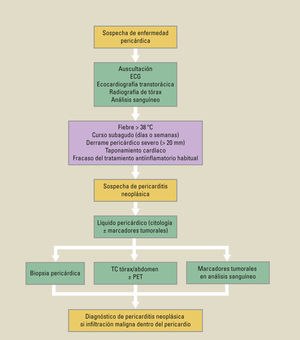

El diagnóstico de afectación pericárdica secundario a una enfermedad neoplásica requiere, inicialmente, de alta sospecha diagnóstica y, posteriormente, de la aplicación sistemática de un protocolo de estudio etiológico.
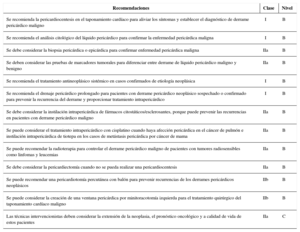
DiagnósticoSi se identifican factores predictores específicos de enfermedad neoplásica, se recomienda el drenaje del líquido pericárdico mediante pericardiocentesis percutánea o con cirugía cardíaca. El estudio citológico del líquido pericárdico puede determinar la existencia de infiltración neoplásica pericárdica. Sin embargo, en ocasiones se requiere el estudio anatomopatológico del pericardio obtenido con biopsia.
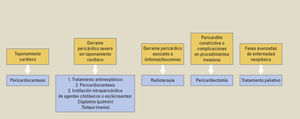
TratamientoSi existe compromiso hemodinámico, el tratamiento consistirá en el drenaje con pericardiocentesis urgente. Ocasionalmente, se recomienda de forma escalonada el tratamiento antineoplásico, pericardiocentesis e instilación intrapericárdica de agentes citotóxicos o esclerosantes. La pericardiotomía percutánea con balón es un tratamiento seguro y eficaz en caso de taponamiento recurrente. En fases avanzadas de la enfermedad neoplásica subyacente, el tratamiento de elección es el paliativo para alivio exclusivo de los síntomas que sufre el enfermo.
The diagnosis of pericardial disorder secondary to a neoplastic disease initially requires high diagnostic suspicion and then the systematic application of an aetiological study protocol.
DiagnosisIf specific predictor factors for neoplastic disease are identified, drainage of pericardial fluid is recommended by percutaneous pericardiocentesis of heart surgery. Cytology of the pericardial fluid can establish pericardial neoplastic infiltration. However, occasionally a biopsy of the pericardium is required for anatomopathological study.
TreatmentIf there is haemodynamic compromise, treatment will comprise drainage with emergency pericardiocentesis. Occasionally, staggered antineoplastic treatment is recommended, pericardiocentesis and intrapericardial instillation of cytotoxic or sclerosing agents. Percutaneous balloon pericardiotomy is a safe and effective procedure in the event of recurrent tamponade. In the advanced stages of the underlying neoplastic disease, the treatment of choice is palliative, exclusively to alleviate the patients’ symptoms.
Identifíquese
¿Aún no es suscriptor de la revista?

Comprar el acceso al artículo
Comprando el artículo el pdf del mismo podrá ser descargado
Teléfono para incidencias
De lunes a viernes de 9h a 18h (GMT+1) excepto los meses de julio y agosto que será de 9 a 15h
